
Choosing the right research methodology can feel like finding the perfect pair of shoes – it has to fit, support you throughout your journey, and be flexible enough to handle different terrains. Whether you’re embarking on an academic research project or diving into a business research study, selecting the right approach is crucial to achieving meaningful and reliable results. So, how do you ensure that your methodology doesn’t just fit, but that it perfectly matches your research goals?
Let’s walk through the essential steps to help you make an informed decision, with a dash of humor to make the process a little more fun. After all, research doesn’t have to be all serious business, right?
1. Understand Your Research Question
Before you even begin thinking about methodologies, you need to be clear on the what, why, and how of your research question. Think of this as your research compass. Are you trying to explore new ideas? Or perhaps you’re testing a hypothesis? The answer to these questions will help determine your approach.
- Exploratory Research: If your goal is to explore a new concept or area, you might lean toward qualitative methods (e.g., interviews, case studies). This is like setting out on an adventure with no map—just an open mind and curiosity.
- Descriptive Research: If you want to describe characteristics or behaviors, a more structured approach like surveys or observations can help.
- Explanatory Research: Want to determine cause and effect? You’re looking at quantitative methods, like experiments or statistical analysis.
2. Qualitative vs. Quantitative: Choose Your Weapon
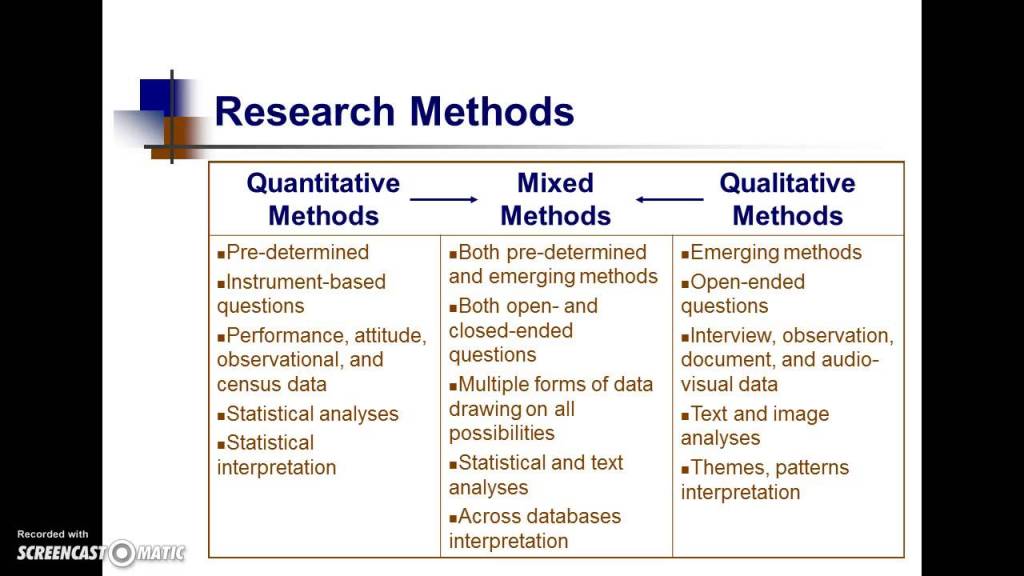
The battle between qualitative and quantitative methods is real, but both are powerful tools depending on the situation. Let’s break it down:
- Qualitative Research: This is the more artsy side of research. It’s about understanding experiences, feelings, and insights. Think interviews, focus groups, and content analysis. If you’re exploring human behavior or generating deep insights, this approach is your best friend. It’s like making a gourmet dish—more subjective, but oh-so-delicious when done right.
- When to Use: When you want to uncover deeper meanings, perceptions, or experiences (e.g., exploring how employees feel about a new policy).
- Example Methods: Interviews, observations, thematic analysis.
- Quantitative Research: This is the more scientific side. Think numbers, data, and statistics. It’s about measuring something objectively, often with large samples, and testing hypotheses. It’s the research equivalent of precision engineering—everything has its place.
- When to Use: When you need to measure variables or test hypotheses with large datasets (e.g., analyzing customer satisfaction scores).
- Example Methods: Surveys, experiments, regression analysis.
3. Decide Between Primary and Secondary Data
Data collection is a crucial part of any research methodology, but you also need to decide whether to go straight to the source (primary data) or use existing data (secondary data).
- Primary Data: This is fresh, straight-from-the-source data that you collect yourself. It’s like making your own pizza dough—it’s more work, but it’s all yours.
- When to Use: When you need original data specific to your research question. You might be conducting surveys, interviews, or field experiments.
- Secondary Data: This is data that someone else has already collected. It’s like grabbing a pizza from your favorite restaurant—it’s quick, convenient, but not as personalized.
- When to Use: When there’s existing data that answers your research question, saving you time and effort (e.g., using census data or previous academic studies).
4. Choose Between Cross-Sectional and Longitudinal Research
Now that you know the type of data you’re dealing with, think about how you want to gather it:
- Cross-Sectional: This is a snapshot in time. Think of it like taking a picture—you’re capturing a moment, but not watching how things unfold. This approach is often used in surveys to study a particular population at a single point.
- When to Use: When you want to examine the relationship between variables at one point in time.
- Longitudinal: This is the marathon of research. It tracks data over time, allowing you to see how things change. If you want to track customer behavior over a year or study the long-term effects of a policy, this approach will serve you well.
- When to Use: When you want to study changes or trends over time.
5. Consider the Scope of Your Research
Let’s face it: we all want to do everything, but your research methodology needs to align with the resources available—time, budget, and manpower. There’s no shame in choosing a methodology that works within your limitations.
- Small Scale: If your research is more localized (like a case study or a small survey), qualitative methods or smaller sample sizes work well.
- Large Scale: When you’re dealing with larger populations or national studies, quantitative methods with large samples or even mixed methods (a combo of both qualitative and quantitative) might be the best route.
6. Don’t Forget the Practicalities
Once you’ve picked your research methodology, it’s time to get practical. How easy is it to collect data? What tools and resources do you need? Will your research require specialized equipment or software? Consider the time commitment and the feasibility of your chosen methodology.
7. Test, Evaluate, and Refine
Sometimes, you won’t know if your methodology is truly right until you give it a test run. Think of it like trying on those shoes—you may need to walk around a bit before you commit. If you encounter issues, don’t be afraid to tweak your methodology to better suit your research needs.
Final Thoughts: Finding Your Perfect Match
Choosing the right research methodology is crucial to ensuring the accuracy and success of your project. It’s a bit like picking the right tool for the job—there’s no one-size-fits-all solution. Understanding your research question, objectives, and available resources will guide you to the methodology that will give you the best chance of success. So, the next time you’re preparing for a research project, don’t be afraid to spend some time thinking about your methodology. After all, research is a journey, and the right methodology is your trusty companion.
Happy researching!
 ASK Research Consult
Leave a comment